Kérimé Turkhan Pasha
Ottoman correspondent of Renée Vivien
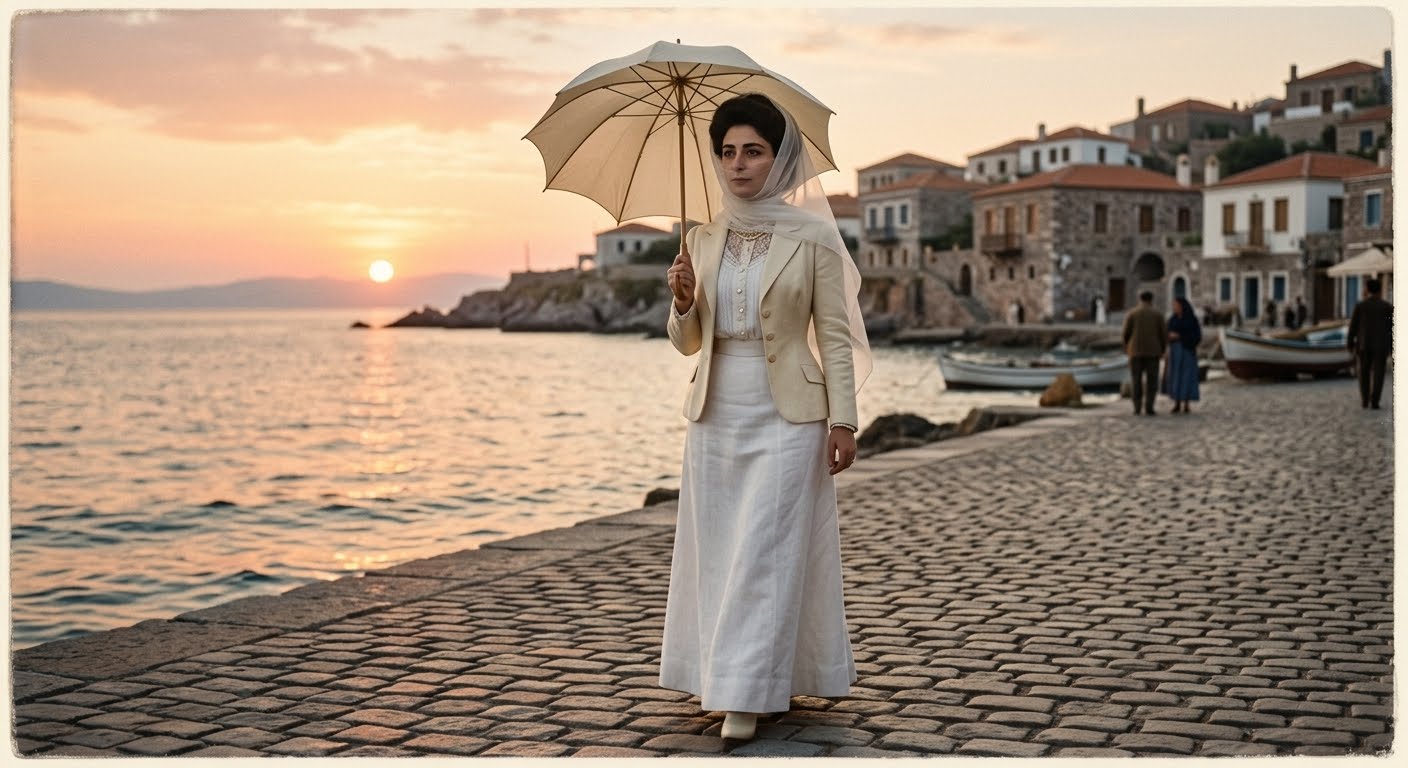
Image notice: The portrait shown here is an AI-generated interpretation based on descriptions. It is not a historical photograph or verified likeness of Kérimé. No authenticated historical image has been identified in the sources reviewed for this archive.
Kérimé, also recorded as Kerime Turhan, was an Ottoman correspondent of the poet Renée Vivien. Their surviving correspondence places her in an intimate literary and personal exchange across Istanbul and Paris.
The Turkish publisher Yapı Kredi describes her as an educated woman from the Ottoman elite and has published Vivien’s letters to her in Aysel Bora’s translation, prepared by Jean Leproux. In a published excerpt of letter 68, Vivien looks forward to seeing and kissing Kérimé again. That is evidence of Vivien’s affectionate address and an anticipated reunion. Kérimé’s own replies, the complete chronology, and the details of their encounters need further documentary study.
The publisher calls Kérimé a diplomat’s wife but qualifies the proposed identification of her husband as Turhan Hüsnî Pasha. Her spouse, full civil identity, and life dates remain open research questions. They do not erase the person documented in this correspondence.
About the image
Kérimé was a Muslim woman in Ottoman Turkey. No authenticated photograph or other historical likeness of her has been identified in the sources reviewed for this archive. The supplied AI-generated image is an interpretation informed by surviving descriptions of her and her era. It is not a photograph of Kérimé and cannot establish her precise appearance.
Sources and further reading
Yapı Kredi Yayınları, Renée Vivien’den Kerime’ye Mektuplar; INHA Agorha record, Lettres de Renée Vivien à Kérimé (1998). The translated excerpt and publisher account were consulted; the complete correspondence and French originals await review.
+ Add a connection or correction ↗
Connections in the archive
Open the institutional or reference source ↗
Explore the sources above to distinguish historical records from the novelist’s fictional interpretation.