Portraits / Paintings / Documents
The things that survived.
A painted face, a letter, a book, a garden recorded in a drawing. These objects can bring a historical life closer, but each tells only part of the story. Explore the item, its maker, its date, and the institution that preserves it.
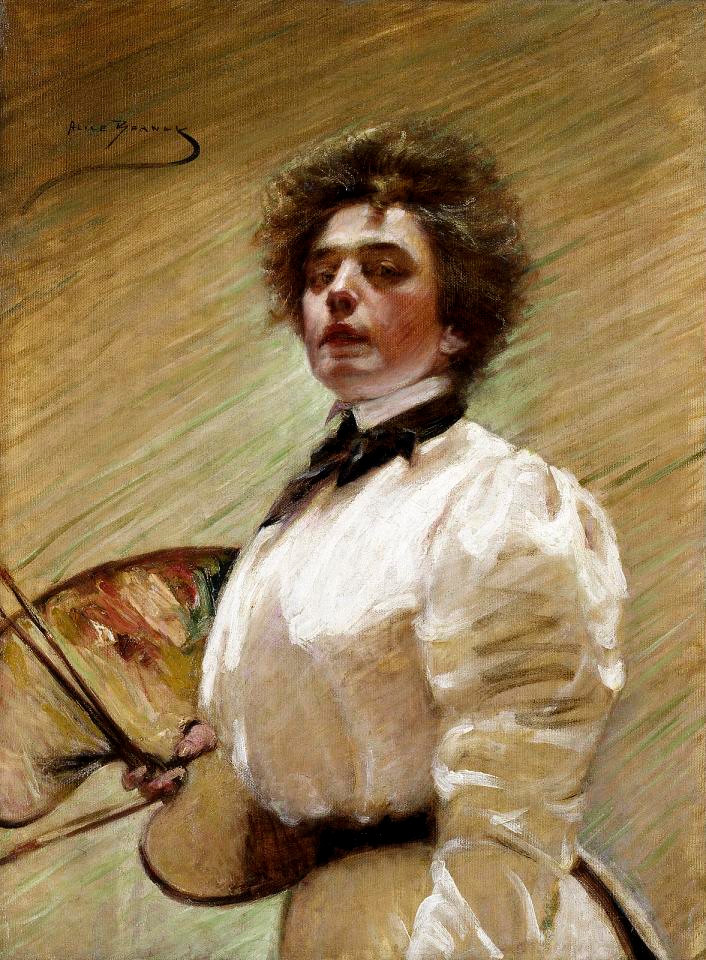
painting / ca. 1906
Alice Pike Barney depicts herself with the tools of painting. The palette and brushes place her artistic work at the center of her self-presentation.
Smithsonian American Art Museum · 1952.13.53
View institutional record ↗painting / 1857–1931
The museum's artist record introduces Alice Pike Barney's work beyond her role as Natalie's mother. Follow it to paintings, dates, and collection information.
Smithsonian American Art Museum
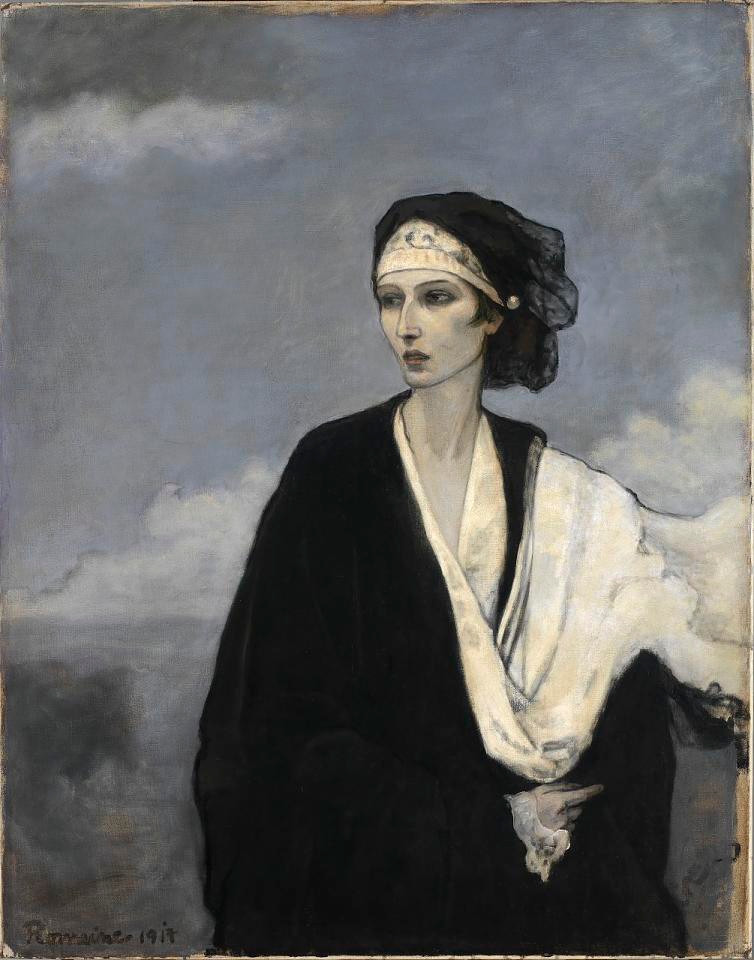
View institutional record ↗Painting / 1917
Romaine Brooks's portrait of Ida Rubinstein brings two artistic lives together in one work. The museum record helps establish the painting's context; the image invites a closer look at Brooks's representation of her subject.
Smithsonian American Art Museum · 1968.18.10
View institutional record ↗sculpture / paintings / c. 1910 and later
This institutional record offers an entry into Laura Dreyfus-Barney's artistic and humanitarian work, including her sculpture of Natalie. It is a biographical resource rather than a single artwork.
Smithsonian American Art Museum
View institutional record ↗painting / 1890
Alice Pike Barney's portrait of Natalie with Missal places family and artistic representation in the same frame. The Smithsonian record identifies the work and its image status; interpretation should begin with what the painting actually shows.
Smithsonian American Art Museum · 1951.14.72
View institutional record ↗painting / 1883
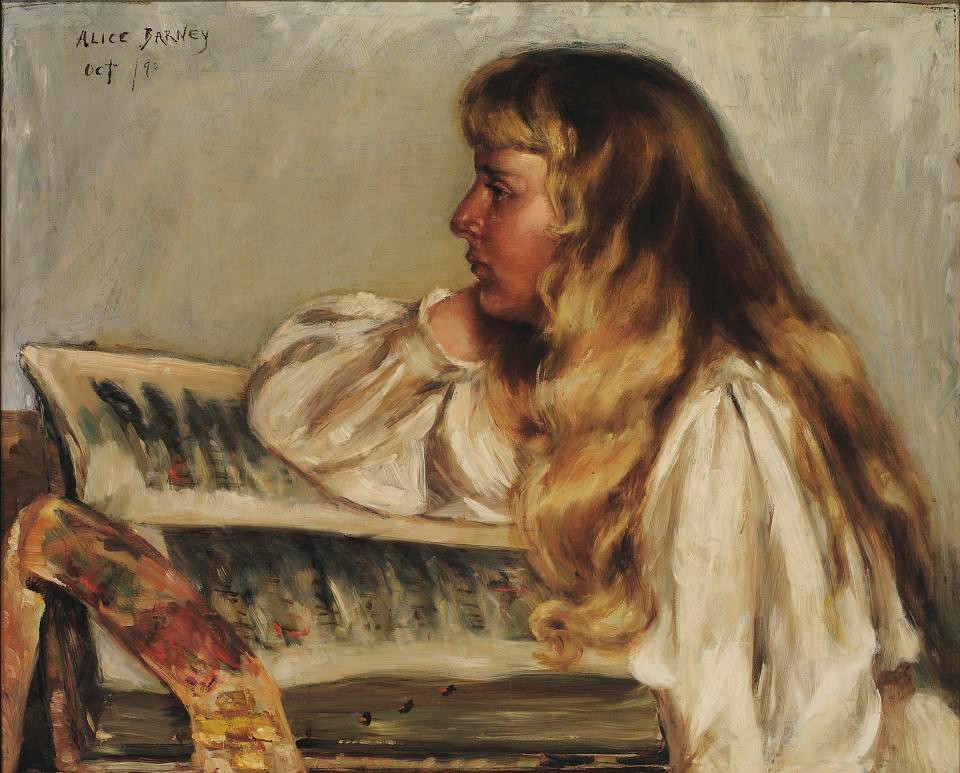
Alice Pike Barney painted Natalie as a child. The portrait preserves an artist-mother's representation of her daughter, not a transparent account of the child's thoughts. Look at the choices Alice made in presenting her.
Smithsonian American Art Museum · 1951.14.73
View institutional record ↗painting / 1887
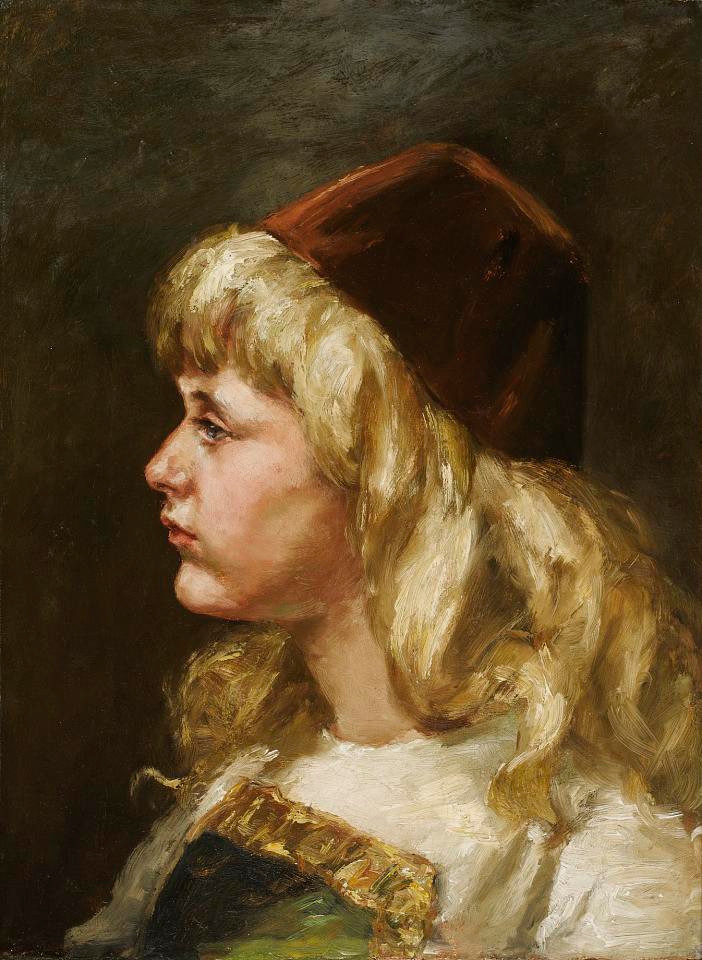
Carolus-Duran painted Natalie as a child in Paris. The portrait belongs to the visual record of her early life and should be read as an artist's representation, not as evidence of her later character.
Smithsonian American Art Museum · 1972.181.2
View institutional record ↗painting / date unknown
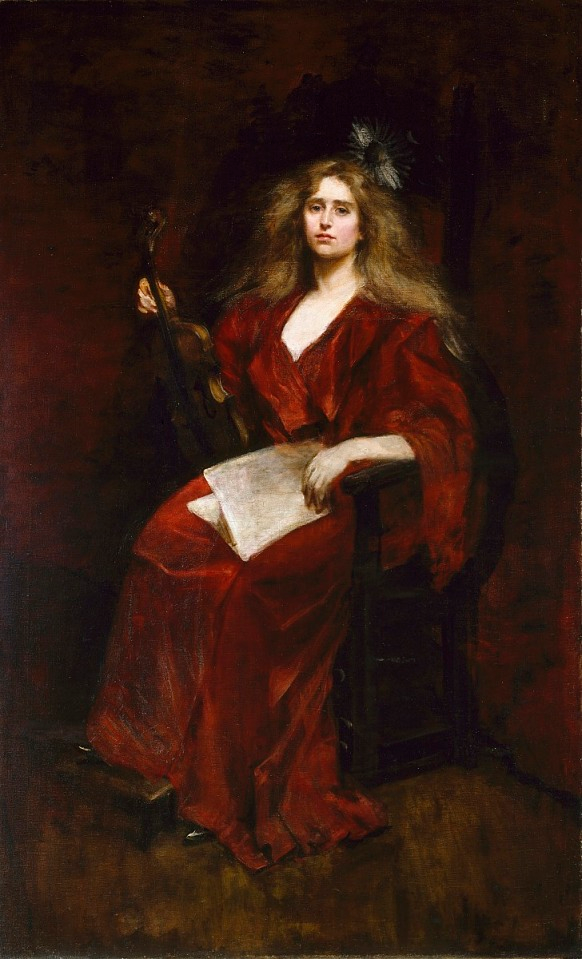
Alice Pike Barney painted Natalie holding a violin. The image connects a family portrait with the artistic world in which Natalie grew up, while leaving the circumstances of the sitting to documentary evidence.
Smithsonian American Art Museum · 1952.13.48
View institutional record ↗painting / 1923
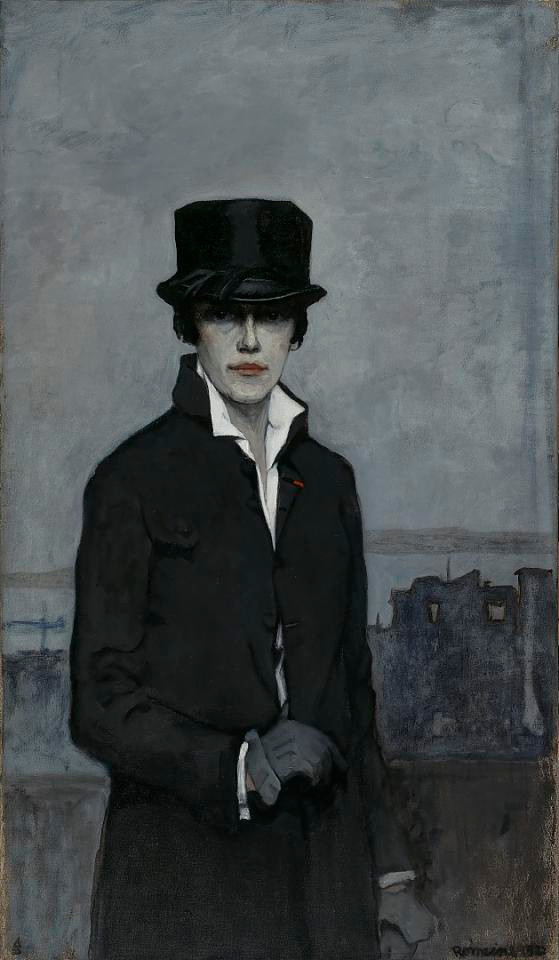
Romaine Brooks presents herself in an overcoat and top hat. The choices of clothing, pose, and restrained painting style make this a self-portrait worth looking at closely, rather than simply an illustration of her biography.
Smithsonian American Art Museum · 1966.49.1
View institutional record ↗photograph / 1910
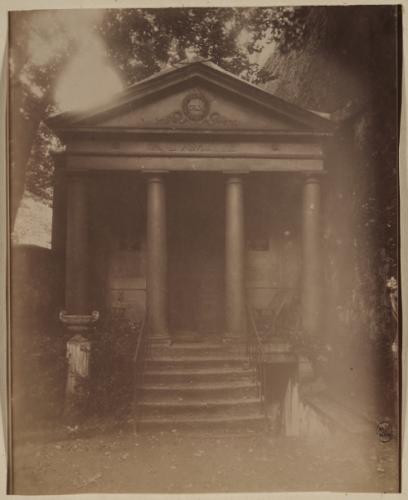
A photograph of the Temple of Friendship in the garden at 20 rue Jacob records the architecture of a real place. The modern Constellation uses that place as inspiration; it is not a reconstruction of this photograph.
Musée Carnavalet · PH33389
View institutional record ↗Drawing / 1901–1905
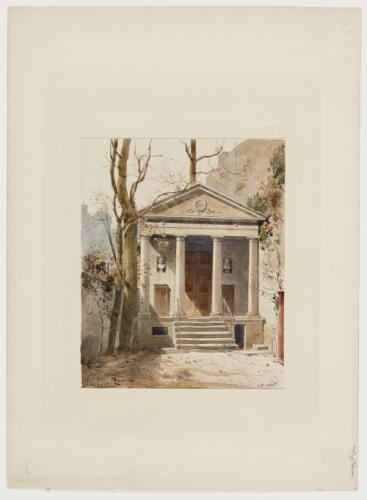
Fédor Hoffbauer's drawing records the Temple of Friendship at 20 rue Jacob. The collection record identifies the original and its stated rights status. It should be distinguished from later illustrative reconstructions.
Musée Carnavalet · D.1356
View institutional record ↗Archive collection / c. 1889–1995
Alice Pike Barney's manuscripts and related records include theatrical work, architectural material, photographs, and a fictionalized autobiography. Each kind of document requires a different kind of reading.
Smithsonian Institution Archives · Record Unit 7473
View institutional record ↗Archive collection / 1861–1965
Family photographs, correspondence, and records of places such as Bar Harbor survive in the Alice Pike Barney Papers. These materials help reconstruct the setting around Natalie and Laura without supplying a complete family history.
Smithsonian Institution Archives · Accession 96-153
View institutional record ↗printed diagram / 1929
A diagram published in 1929 maps names associated with Natalie's salon. It is a historical artifact with its own authorship and context, not a ready-made blueprint for the modern Constellation.
Aventures de l’esprit (published edition) · Frontispiece / carte du salon
View institutional record ↗Archive collection / 1905–1950
Liane de Pougy's surviving correspondence opens a path into her life beyond the most familiar accounts of her Paris years. The archival record should be consulted before drawing conclusions from individual letters.
Bibliothèque nationale de France · Ms 4020 (10–16)
View institutional record ↗letters / 1920–1969
Hundreds of surviving letters between Natalie Clifford Barney and Romaine Brooks offer a rare documentary record of a long relationship. Their existence and count are documented; any claim about a particular letter requires examining that letter.
University of Tulsa Special Collections · 1987-005
View institutional record ↗Letters and manuscript facsimiles / 1892–1897
The British Library's record identifies facsimiles of letters from Oscar Wilde to Lord Alfred Douglas. The letters are primary documents; any account of their meaning should distinguish Wilde's words from later interpretation.
British Library · Add MS 81693
View institutional record ↗book / 1900
Published in 1900, Natalie's portrait-sonnets are part of her early literary record. They should not be confused with the separate, reported private classification of relationships.
Bibliographic/digital copies · 1900 edition
View institutional record ↗Authority record / 1877–1909
This French national-library authority record helps establish the writer's names, including Pauline Mary Tarn and Renée Vivien, and the shared pen name Paule Riversdale. It verifies identity information, not an interpretation of her personality.
Bibliothèque nationale de France · FRBNF11928588
View institutional record ↗Archive collection / 1910–2020
The Romaine Brooks Papers preserve correspondence, journals, and other documents across more than two thousand digitized pages. They provide research leads into her work and relationships, but individual claims still need their own sources.
Smithsonian Archives of American Art · Collection 6290
View institutional record ↗scholarly study / 2019
This scholarly study examines how Natalie and Renée Vivien interpreted Sappho. It is a modern analysis of literary reception, not an ancient source or a record of private conversations.
UC eScholarship · DOI 10.5070/R72145856
View institutional record ↗