Dolly Wilde
Literary personality
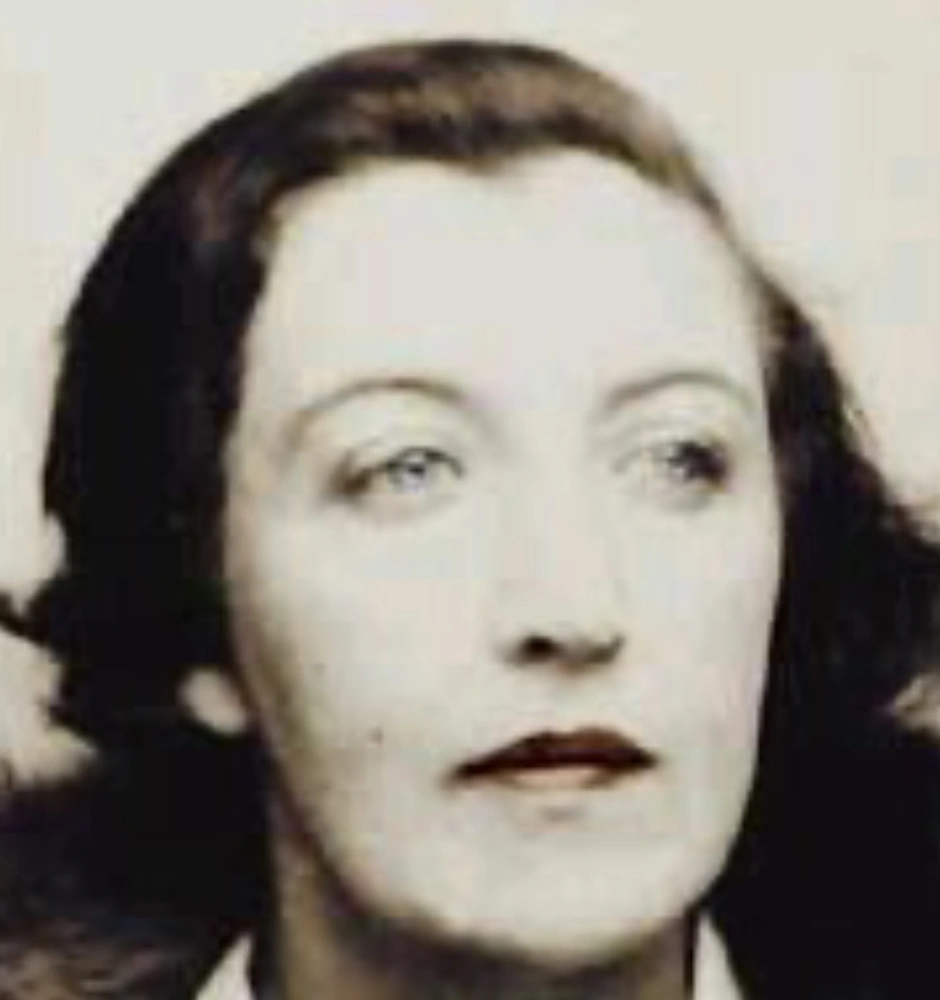
Dolly Wilde’s historical record challenges a biography built only around published accomplishments. Conversation, letters, and relationships carried much of her influence, leaving a record preserved largely by others. Joan Schenkar’s biographical project explicitly set out to recover a life overshadowed by the achievements of her famous uncle. The absence of an equivalent published body of work does not make the niece an empty place in the archive.
Born Dorothy Wilde in London in 1895, she was the daughter of Oscar Wilde’s brother Willie and Sophie Lily Lees. Her father died while she was young. The available account of her childhood is sparse, and it does not justify a reconstruction of her inner life. During the First World War she went to France and served among women ambulance drivers, entering a form of work that wartime mobilization had made more accessible to women.
Her relationship with Marion Barbara “Joe” Carstairs belongs to the earlier wartime network. Historic England identifies their shared Paris accommodation and places both women within ambulance work. EPIC explicitly describes them as lovers. Those accounts support retaining an attachment alongside a shared workplace, while the exact sequence still needs service records and letters. Carstairs’s subsequent racing and business career also requires an individual biography; it should not disappear behind the better-known Wilde surname. [2,4]
She remained associated with Paris’s interwar literary and lesbian circles. Contemporary recollections and later biographers describe a gifted conversational presence. Such descriptions should stay attributed to their witnesses, rather than become invented speeches. Her relationship with Natalie Clifford Barney was direct and enduring, placing her within the rue Jacob household and salon. That bond is the central documented route into the Constellation, though Dolly’s wartime work and wider relationships preceded it. [1,2]
A contemporary glimpse survives in Janet Flanner’s Paris letter for the July 26, 1930 issue of The New Yorker. Reporting on a costume party hosted by the Duchesse de Clermont-Tonnerre, Flanner identifies Dolly dressed as Oscar Wilde and Natalie among the guests. This records a particular public appearance without supplying a speech or claiming access to either woman’s thoughts. It also shows how Dolly participated in a culture where family resemblance, clothing, and literary identity could be performed before witnesses.
EPIC reports other affairs with Alla Nazimova and Janet Flanner. These attachments remain separately classified as biographical reports; the original intimate evidence is still required. Flanner’s published description of a party establishes her observation of Dolly, but does not itself establish an affair. The distinctions matter when a small circle’s social encounters are repeatedly retold as a complete sexual history. [2,5]
Her later life involved illness and dependence on the resources and hospitality of others. The research presently supports a restrained account of those circumstances, not a catalogue of distressing anecdotes. She returned to England as war overtook France and died in London in 1941. The public-history account reports that the coroner could not determine the cause. It is therefore inaccurate to present an overdose as an established finding.
Natalie’s memorial volume Oscaria gathered recollections of Dolly. Together with surviving letters, it offers evidence of how a community preserved a woman whose gifts were exercised largely in personal exchange. The volume must also be read as an act of remembrance by people with their own attachments. Dolly illuminates the uneven survival of women’s lives: a published novel is easily counted, while an intervention in conversation or a sustaining relationship may leave only someone else’s recollection. A fuller biography requires those particular traces to be read, without manufacturing achievements or reducing the life to its ending.
+ Add a connection or correction ↗
Reported Private List category: Liaisons. Evidence weight: Research lead / not yet verified. Attribution requires an exact original or published reference.
Connections in the archive
- Natalie Clifford Barney — romantic. Relationship documented in biographical literature, notably Joan Schenkar’s Truly Wilde. Evidence: Research lead / not yet verified Source 1 ↗ Source 2 ↗ 5 archival assertions consolidated for display
- Oscar Wilde — family. Dolly was Oscar Wilde’s niece; literary family connection. Evidence: Research lead / not yet verified Source 1 ↗
Open the institutional or reference source ↗
Explore the sources above to distinguish historical records from the novelist’s fictional interpretation.