Margaret Caroline Anderson
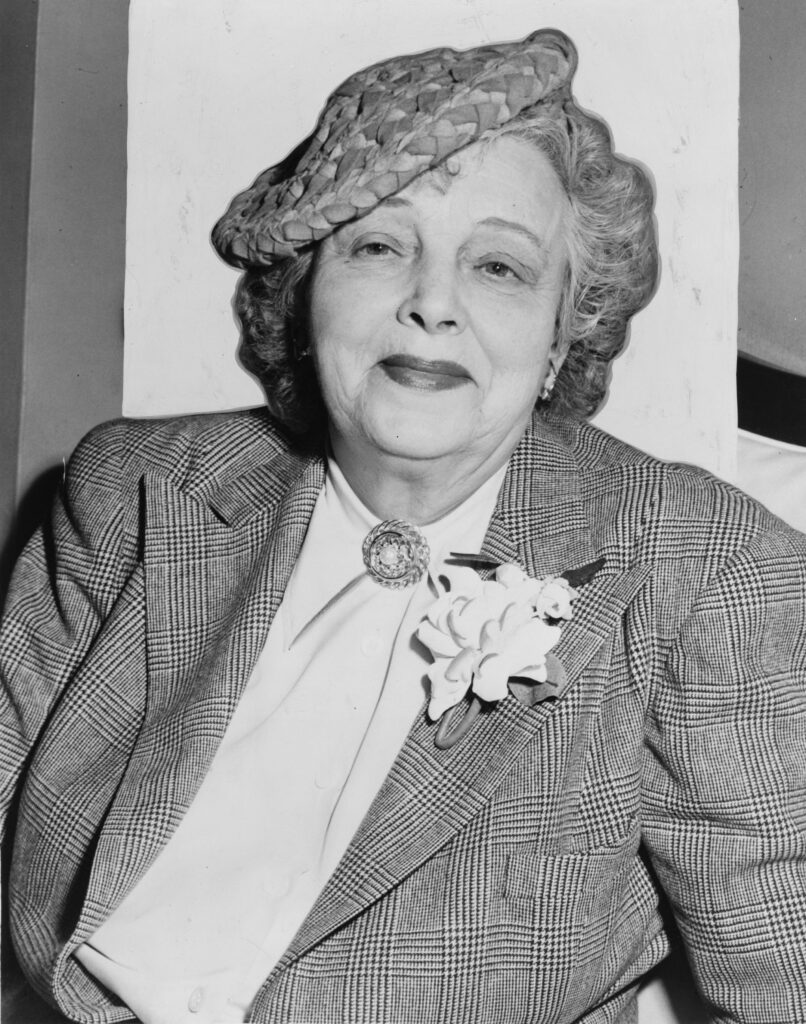
Margaret Anderson once published an issue with much of its space left blank. The September 1916 Little Review made dissatisfaction with available material visible on the page. The gesture expressed an editor’s insistence upon standards, but it also made a demand of readers: they had to encounter absence as part of a magazine they expected to contain writing. Editorial authority could be theatrical as well as practical.
Born in Indianapolis in 1886, Anderson attended the Western College for Women and later worked in Chicago as a reviewer and editor. She founded The Little Review in 1914. A magazine gave her a way to assemble literature, criticism, music, and visual art without waiting for another institution to determine their relation. Its identity evolved through the work of collaborators, including Jane Heap, who became co-editor, and Ezra Pound, its foreign editor. [1,2]
The magazine moved from Chicago to New York and subsequently into a transatlantic setting. Its contributors included Djuna Barnes, Mina Loy, Gertrude Stein, William Carlos Williams, and many others. These connections make Anderson a participant in the production of modernism, rather than someone who merely recognized important writers after their reputations were secure. Publication put texts into circulation and made experiments available for response.
The March 1918 issue began serializing James Joyce’s Ulysses. Its contents placed the first episode beside work by Wyndham Lewis, Jessie Dismorr, and others. This arrangement is worth retaining: the novel originally reached these readers within a crowded periodical, not as an isolated monument. Anderson and Heap’s obscenity conviction in 1921 ended the serialization. The editorial risk was borne by women whose legal responsibility cannot be transferred to the male novelist’s subsequent fame. [2,3]
Anderson’s relationship with Heap joined professional and intimate life, but their careers did not remain identical. After leaving the magazine’s editorship, Anderson moved to France and shared her life with the singer Georgette Leblanc until Leblanc’s death in 1941. Her study of Gurdjieff also became an enduring intellectual commitment, represented in The Unknowable Gurdjieff. These affiliations widened her world beyond literary editing.
She wrote three autobiographical volumes, beginning with My Thirty Years’ War. Autobiography allowed the editor to become the principal subject, choosing how readers would encounter her past. The resulting accounts are valuable evidence of self-presentation as well as sources for events. Surviving drafts, letters, and publishers’ correspondence offer ways to examine that process without treating retrospective recollection as an unmediated record. [2,4]
Anderson died in France in 1973. Her connection with Natalie is supported by Maryland’s account of the salon circle represented in Barnes’s Ladies Almanack. Satirical characterization, however, must be distinguished from a chronological biography. Within the Constellation, Anderson brings attention to the work required before a literary reputation exists: selection, production, argument, legal exposure, and the willingness to give a text public space. Her own writings also show that the person who made a forum for others continued seeking forms for her independent life. [2,5]
+ Add a connection or correction ↗
Connections in the archive
Explore the sources above to distinguish historical records from the novelist’s fictional interpretation.