Wanda Landowska
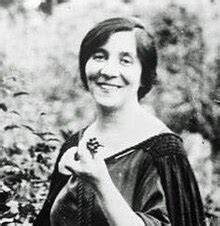
Wanda Landowska brought early keyboard music into public institutions that could also pay a living performer. In December 1945 the Metropolitan Museum engaged her for two concerts, each at a fee of $750. Rebecca Lindsey’s account draws on museum correspondence and programs to describe an artist whose reputation could attract more listeners than the hall accommodated. Revival required audiences, invitations, and negotiated work as well as scholarship.
Born in Warsaw in 1879, Landowska studied piano and composition before moving to Paris in 1900. That year she married the folklorist Henri Lew. Her research into seventeenth- and eighteenth-century music developed alongside performance and writing; Musique Ancienne appeared in 1909. The Library of Congress chronology records her first public harpsichord program in 1903 and later teaching in Berlin. She built a career by studying a repertory and persuading others to hear it.
Her instruments complicate any simple equation of musical revival with literal restoration. She commissioned harpsichords from Pleyel that incorporated modern construction, including an iron frame. The Met’s object record explicitly distinguishes these instruments from makers’ attempts to copy historical models. Composers including Manuel de Falla and Francis Poulenc also wrote new music for them. Landowska’s work thus helped generate a contemporary repertory while reopening access to older music.
In 1925 she established a school at Saint-Leu-la-Forêt, north of Paris. It became a center for study and performance whose library and instruments were subsequently plundered by the Nazis. Flight in 1940 and immigration to the United States in 1941 interrupted that institution’s life. The losses continue to shape the archive: materials preserved after displacement cannot represent every earlier stage of an artistic career equally. [2,4]
Denise Restout entered her life as a student and became an assistant and long-term companion. The Library of Congress records their escape together and Restout’s work preserving Landowska’s legacy. Restout later edited Landowska on Music. Teaching and personal care contributed to the survival of a body of work, but Restout’s editorial choices and independent career require their own biography. The precise language and chronology of their intimate relationship must be checked in the documents.
American concert life gave Landowska another professional setting. Lindsey records earlier Met appearances in 1923 and 1927, including a free Christmas Day recital intended for audiences whose leisure was often restricted to holidays. Her 1942 New York performance of Bach’s Goldberg Variations helped establish her authority in exile; later recordings and teaching extended her influence. Museum history places her within an audience-building project, rather than presenting musical interpretation as work carried out without institutions or money. [1,2]
The route to Natalie Clifford Barney is specific but limited. The Doucet inventory catalogues Landowska letters and related materials in Natalie’s papers, while Leontis includes her in a shared erotic-circle account. Those descriptions establish research connections; they do not by themselves establish a Landowska–Barney affair. Within the Constellation, Landowska illuminates women’s musical authority, the labor of teaching, and the material losses that accompanied wartime displacement. [5,6]
+ Add a connection or correction ↗
Connections in the archive
Open the institutional or reference source ↗
Explore the sources above to distinguish historical records from the novelist’s fictional interpretation.