Anna Timora / The documented archive

Laura Dreyfus-Barney

Bahá’í scholar, humanitarian, sculptor, compiler, philanthropist and international peace worker
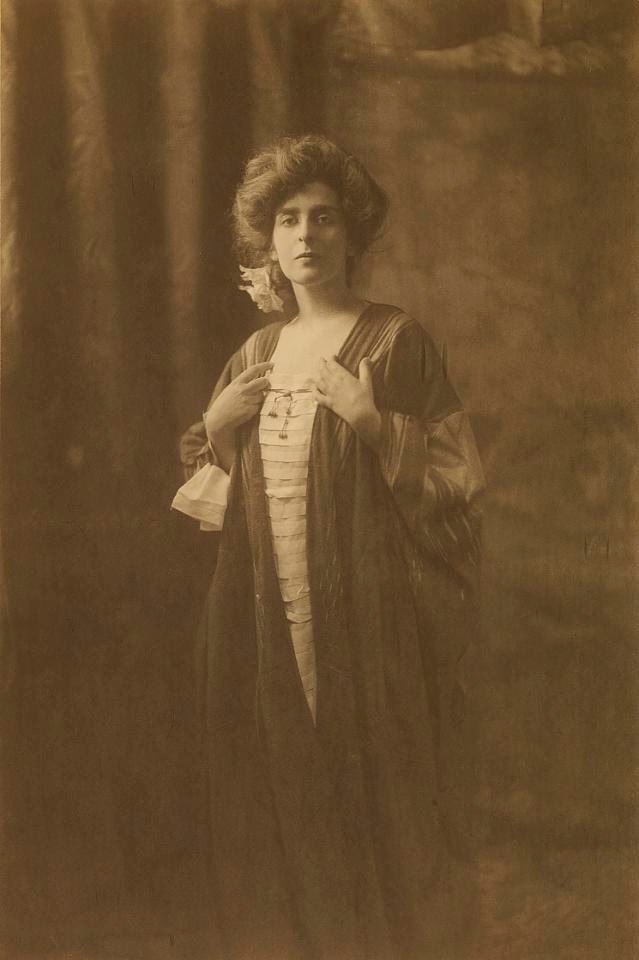
Historical photograph of Laura Dreyfus Barney by Toponier Roissonnas
Toponier Roissonnas, Laura Dreyfus Barney, photograph, Smithsonian American Art Museum, 1966.111.23; gift of Laura Dreyfus Barney and Natalie Clifford Barney in memory of Alice Pike Barney. Smithsonian labels the image Free to use. https://americanart.si.edu/artwork/laura-dreyfus-barney-21178

Laura Clifford Barney’s most consequential literary undertaking began with questions. Between 1904 and 1906 she asked ‘Abdu’l-Bahá about religion, philosophy, and Christian theology in ‘Akká, then helped make those exchanges available to readers far beyond the household in which they occurred. Some Answered Questions, first published in 1908, became an enduring work in the Bahá’í tradition. Its existence depended on her initiative, on secretaries who recorded the answers, and on the subsequent work of editing and translation. [1,2]

Born in Cincinnati in 1879, Laura was the younger daughter of Albert Clifford Barney and the painter Alice Pike Barney. Natalie was her elder sister. Wealth gave both daughters access to education and Europe, but they did not spend those opportunities in the same way. Around 1900 Laura encountered May Ellis Bolles, later Maxwell, in Paris and became a Bahá’í. Her independent history moves through religious inquiry, sculpture, international travel, and organized humanitarian work. [2,3]

The preface to Some Answered Questions is unusually useful evidence of editorial judgment. Laura explains that the original conversations had no systematic order and that the published arrangement was made for readers. She also acknowledges the limits of her own initial understanding. These are statements about the making of a book, not reasons to diminish her agency. She recognized a need, asked permission to publish, and participated in turning spoken instruction into a durable text.

Hippolyte Dreyfus collaborated in the translation and publication. They married in 1911 and both adopted the combined surname Dreyfus-Barney. His legal and linguistic expertise belonged to a shared undertaking, but the combined name should not obscure the origin of Laura’s questions or convert two careers into one. The archive needs separate entries for both people.

Sculpture forms another part of her life. The French Sculpture Census records her artistic work and notes a revealing disagreement around a nude figure associated with Natalie: Laura and Alice publicly denied that Natalie had been its model. An archive can preserve that disagreement without deciding that a sculpture is a transparent confession. A represented body, an attributed sitter, and a public denial are different kinds of evidence.

During the First World War Laura served in ambulance and Red Cross work in France. Her later activities extended into international women’s organizations and educational cooperation. Mona Khademi’s research connects her to the International Council of Women and League of Nations committees. The dates and exact offices should be checked against those bodies’ own records; broad admiration is no substitute for institutional precision. [2,4]

Her connection to Natalie is close, but her significance is not borrowed from her sister. Laura’s life shows another way a woman of the same family could move beyond its expected limits: through faith, language, service, and sustained institutional work. The Constellation becomes more historically useful when it includes that difference.

FROM THE ARCHIVE / RESEARCH & SOURCES

Beyond the introduction

An independent intellectual life

Laura Clifford Barney, later Laura Dreyfus Barney (1879–1974), studied sculpture and served in humanitarian organizations. The Smithsonian documents both her artistic production and her work with international relief and institutions. Among her works is a sculpted portrait of Natalie dated 1910.

Her Bahá’í scholarship

Laura’s questions to ‘Abdu’l‑Bahá during visits to ‘Akká between 1904 and 1906 became the foundation of Some Answered Questions, first published in 1908. Her contribution should receive a substantial, independent treatment on the site, including the history of the book, rather than appearing only as a familial connection to Natalie.

Research library and collection guide ↗

Bahá’í scholar, humanitarian, sculptor, compiler, philanthropist and international peace worker / 1879–1974

+ Add a connection or correction ↗

Connections in the archive

  • Natalie Clifford Barney — family. Sisters; Laura sculpted a likeness of Natalie. Evidence: Research lead / not yet verified Source 1 ↗ Source 2 ↗ 5 archival assertions consolidated for display
  • Alice Pike Barney — family. Mother and daughter; Alice painted Laura, who became a sculptor and humanitarian. Evidence: Research lead / not yet verified Source 1 ↗ Source 2 ↗ 5 archival assertions consolidated for display
  • Albert Clifford Barney — family. Daughter–father [Lifetime to 1902] Evidence: Research lead / not yet verified Source 1 ↗ 4 archival assertions consolidated for display
  • Hippolyte Dreyfus-Barney — social. Spouses and collaborators [1911–1928] Evidence: Research lead / not yet verified Source 1 ↗ 4 archival assertions consolidated for display
  • May Bolles Maxwell — social. Religious teacher; meeting through Paris community [1900] Evidence: Research lead / not yet verified Source 1 ↗ 4 archival assertions consolidated for display
  • ‘Abdu’l-Bahá — social. Questioner, compiler and translator [1904–1906; later western visits] Evidence: Research lead / not yet verified Source 1 ↗ 3 archival assertions consolidated for display
  • Shoghi Effendi — social. Consultation and correspondence [Childhood meeting; 1922 onward] Evidence: Research lead / not yet verified Source 1 ↗ 3 archival assertions consolidated for display
  • Marianne Jerard — social. Travel companions [1906]. Trip to Turkistan and Iran. Evidence: Research lead / not yet verified Source 1 ↗ 4 archival assertions consolidated for display
  • Ugo Giachery — social. Associate and memorialist [Dates not established; memorial 1974]. Memorial language reports acquaintance; obtain correspondence. Evidence: Research lead / not yet verified Source 1 ↗ 4 archival assertions consolidated for display
  • Jack McLean — social. Interview [1967]. Post-1945 extension; retrospective account. Evidence: Research lead / not yet verified Source 1 ↗ 4 archival assertions consolidated for display
  • Natalie Clifford Barney — artistic. Sculptor–subject [Early 20th century]. Laura made a nude statue of Natalie. Evidence: Research lead / not yet verified Source 1 ↗ 4 archival assertions consolidated for display
  • Juliet Thompson — social. Shared Alice network [Before 1945]. Alice–Juliet photo exists; direct Laura–Juliet friendship not yet sourced. Evidence: Research lead / not yet verified Source 1 ↗ 4 archival assertions consolidated for display
  • Violet Shillito — social. Childhood friends [Childhood–1901] Evidence: Research lead / not yet verified Source 1 ↗ 4 archival assertions consolidated for display
  • Mary Wallace Shillito — social. Childhood friends [Childhood onward] Evidence: Research lead / not yet verified Source 1 ↗ 4 archival assertions consolidated for display
  • Romaine Brooks — social. Jewelry designer–recipient [Exact dates pending]. Known biographical lead; not counted as verified path until cited. Evidence: Research lead / not yet verified 5 archival assertions consolidated for display

Open the institutional or reference source ↗

Explore the sources above to distinguish historical records from the novelist’s fictional interpretation.

Explore the constellation ↗ · The Natalie novels ↗